Module 2 Deep Dive: CA Food Code & CalCode
Master the most heavily tested module: Temperature control, cross-contamination, CalCode violations, and how to spot food safety violations on the REHS exam.
Module 2 is the heaviest-tested content on the REHS exam. Food protection scenarios dominate the exam because food safety is core to environmental health and a primary focus of local health departments. If you master Module 2, you protect a significant portion of your score.
This module is also approachable if you know how to study it. Unlike abstract concepts in toxicology or epidemiology, food code violations are practical and concrete. You can visualize them. You can memorize the rules. You can apply them to real scenarios.
The architecture of CalCode
The California Retail Food Code (CalCode) isn't random rules. It's organized around preventing the main routes of foodborne illness transmission:
- Temperature control (TCS foods, cold storage, cooking temperatures)
- Cross-contamination prevention (raw/ready-to-eat separation)
- Personal hygiene (handwashing, illness reporting)
- Cleaning and sanitization (surfaces, equipment)
- Food source verification (approved suppliers)
Every regulation in the code fits into one of these categories. Understanding the architecture helps you remember the rules: they're not arbitrary, they're designed to block specific pathways to contamination.
When studying a CalCode rule, ask: Which contamination risk is this rule preventing? Temperature rule? It's preventing bacterial growth. Handwashing rule? It's preventing pathogen transfer. This context helps rules stick in memory.
Temperature control: The high-frequency topic
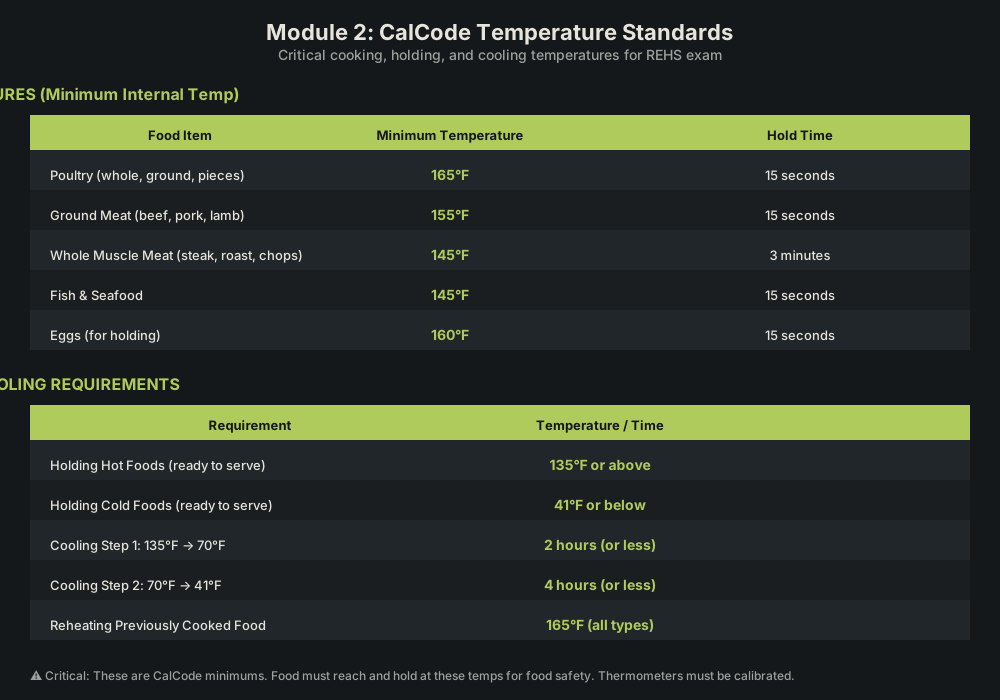
Temperature control generates more exam questions than any other food code topic. Know these temperatures cold:
- Cooking temperatures: Poultry 165°F, ground meat 155°F, whole cuts 145°F, seafood 145°F, eggs 160°F
- Holding temperatures: Hot foods must be held at 135°F or above, cold foods at 41°F or below
- Cooling: From 135°F to 70°F within 2 hours, then 70°F to 41°F within 4 hours (total 6 hours maximum)
- Reheating: Previously cooled foods must reach 165°F
Exam questions test whether you know these temperatures and can apply them to scenarios. "A restaurant cooked chicken breast to 160°F and then held it at 130°F. What violation occurred?" You identify: Cooking temp is correct (145°F minimum, 160°F achieved). Holding temp is wrong (must be 135°F or above; 130°F is below). Answer: Improper holding temperature violation.
Cross-contamination: The second-highest frequency topic
Cross-contamination questions test your understanding of which foods can be stored near which other foods.
The core rule: Raw animal products must be stored below ready-to-eat foods. The hierarchy from bottom to top is: raw whole muscle meat, ground meat/comminuted, seafood, then ready-to-eat. This prevents drips from raw products contaminating foods that won't be cooked.
Exam questions are scenario-based: "A restaurant stores raw chicken on the top shelf and lettuce on the lower shelf. What violation?" Answer: Cross-contamination risk. Raw chicken drips onto ready-to-eat lettuce.
Personal hygiene and handwashing
Food handlers must wash hands at specific times: after using the restroom, after smoking, before handling food, after touching raw animal products. Employees who are ill (vomiting, diarrhea, jaundice) must be excluded from food handling until they've been symptom-free for a specified period.
The exam tests whether you know these rules and can identify violations. "An employee with diarrhea is working the prep line." Clear violation: Ill employee exclusion requirement not followed.
Common CalCode scenarios on the exam
The exam uses realistic food facility situations. Here are patterns you'll see:
Scenario type 1: Temperature violations
"During an inspection, the environmental health specialist found ground beef held at 50°F. What's the violation and what's the corrective action?" Violation: Improper holding temperature (must be 41°F or below or 135°F or above). Corrective action: Discard the food, properly calibrate temperature controls, retrain staff.
Scenario type 2: Cross-contamination
"Raw chicken is stored on the same shelf as a tray of sandwiches. What violation has occurred?" Cross-contamination risk. Corrective action: Separate raw poultry below ready-to-eat foods. Discard potentially contaminated ready-to-eat food.
Scenario type 3: Cleaning and sanitization
"A food prep surface was wiped with a cloth but not sanitized between handling raw meat and chopping vegetables. What violation?" Improper cleaning. Corrective action: Clean and sanitize the surface, discard the vegetables, retrain staff on sanitation procedures.
How to study Module 2 effectively
Read the CalCode rules once for context. Then focus on scenario practice. The exam doesn't ask "What temperature must ground beef be cooked to?" in isolation. It embeds that in a scenario: "A restaurant served ground beef cooked to 140°F. What happened?" You identify the violation and understand the risk.
Practice these scenarios repeatedly. Use knowledge checks. Work through the 16-module scenario at the end of Module 2. Then look for cross-module scenarios that include food safety (Module 3 often combines modules 2 and 3 in scenario questions).
Module 2 mastery comes from scenarios, not from memorizing rule lists. You need to see violations in context.
The bottom line
Module 2 dominates the exam because food safety is foundational to environmental health and a primary responsibility of local health departments. Master temperature control, cross-contamination, and the flow of food through a facility. Know the core regulations cold. Practice scenarios relentlessly. This module is where passing candidates separate from those who don't.
Ready to start studying?
Three free companion PDFs unlock with your email: diagnostic pretest, flashcards, and the exam-day guide.
Unlock the free PDFs